What is a switchback?
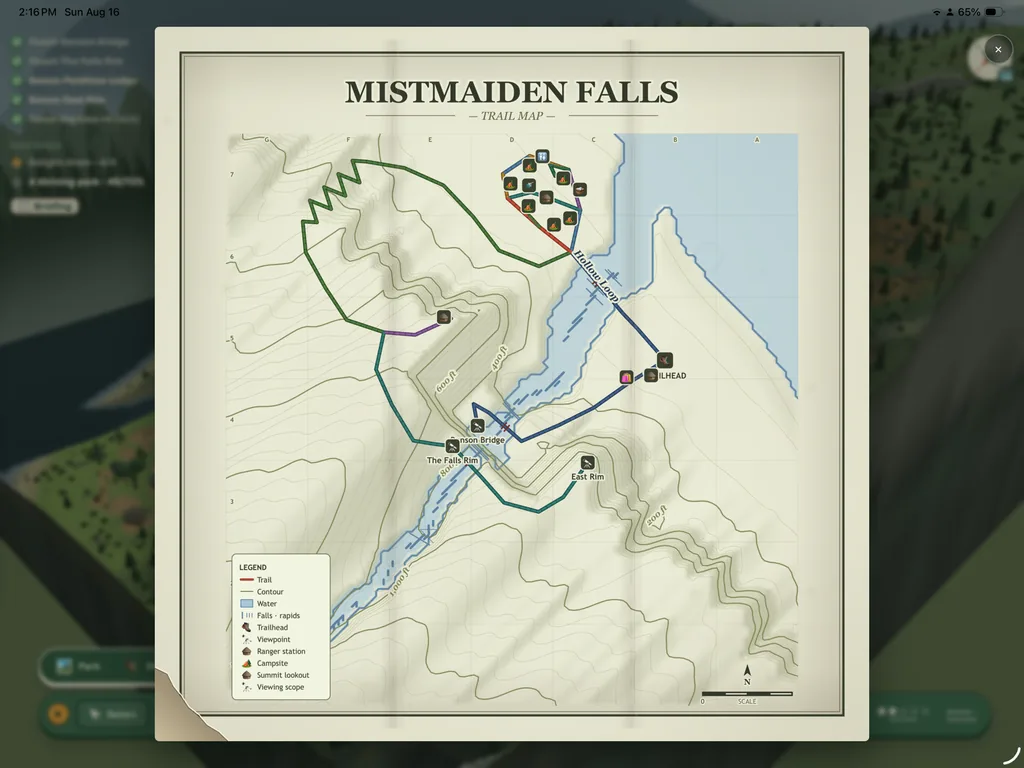
A switchback is a sharp turn, close to a full reversal, that lets a trail climb a slope too steep to walk straight up. The trail crosses the face at a gentle angle, turns back on itself, and crosses again a little higher. From below, a run of them reads as a zigzag.
Why don't trails go straight up?
Because of grade, and because of water.
Grade is rise over run. A trail that gains 10 feet over 100 feet of length has a 10 percent grade. A mountainside can be far steeper than anyone wants to walk, but a trail laid across it rather than up it can keep a gentle grade on very steep ground. It is longer, and it is the reason a family and a trail runner can share the same path.
Water is the larger reason. A trail that runs straight down the fall line becomes the easiest way off the hill for every storm, and within a few seasons it is a gully of loose rock and roots. A trail that traverses the slope sheds water off its downhill edge before it gathers speed, and lasts for decades.
How steep is too steep for a trail?
There is no single number, but trail builders work to two well-known rules of thumb, both from the International Mountain Bicycling Association's trail guidelines and used widely by land managers.
- The half rule. A trail's grade should be no more than half the steepness of the hillside it crosses. On a 20 percent slope, the trail stays at 10 percent or less, so water still runs off sideways instead of down the tread.
- The ten percent average. Over its whole length, a trail that averages 10 percent or less tends to hold up. Short pitches can be steeper; long ones should not be.
When a hillside is so steep that a gentle traverse would run out of room, the trail has to turn. That turn is the switchback.
Switchbacks and climbing turns
The two are often confused. A climbing turn reverses direction on the slope itself, keeping the hillside's grade through the bend, and only works on gentler ground. A true switchback turns on a level landing cut into the hill, often held up by a rock retaining wall, so the trail changes direction on flat ground before it climbs again. Building one is slow, careful work, which is part of why a well-made switchback is admired by the people who maintain trails.
Why you should not cut a switchback
A shortcut between two legs runs straight down the fall line: the exact line the trail was built to avoid. Trampled plants stop holding the soil, the next rain finds the new groove, and the gully that follows can undercut the trail itself. Staying on the tread, the travel on durable surfaces principle of Leave No Trace, is what keeps a switchback working. The few minutes saved are borrowed from everyone who walks it next year.
Roads and railways
Mountain roads do the same thing with hairpin bends. Railways, which can manage only a few percent of grade, once climbed with zigzag switchbacks of their own: the train runs forward up one leg, stops, and backs up the next.
Switchbacks in Switchback
Switchback is a cozy park management game named for the turn. You draw the trails through a national park, and grade is a real number there. A path at a comfortable grade builds as an ordinary trail. Steeper ground turns it to stairs, which hikees climb slowly and tire on. Steeper again, and only the switchback tool will gain the height, benching level legs into the slope and turning them back on one another. Past that, a cliff is a cliff.
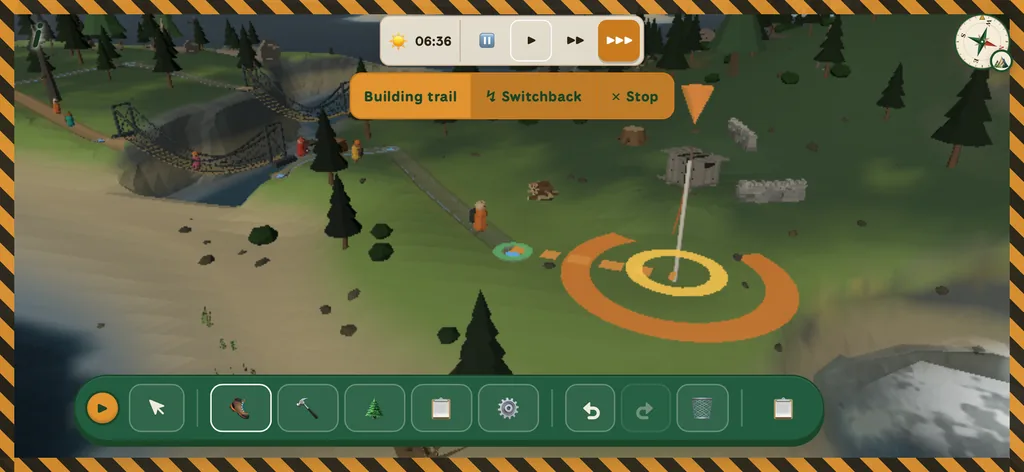
Every hikee arrives with a plan and an ability of their own, so a climb that suits a strong day hiker will turn a family around. Then you can drop into first person and walk the trail yourself, at hiking speed, which is the honest test of any switchback. The trail tutorial on the game page shows one built from the first leg to the last.
Get Switchback
Free on the App Store and Google Play, for iPhone, iPad and Android. Made by Swank Labs.
iPhone · iPad · Android · Free